
Page Summary
- Biologic therapy is one of the treatment options for severe nasal polyps, and it works by reducing the inflammation driving the problem.
- Biologic therapy can be discussed according to how severe the disease is and how much benefit other treatments have given.
- Biologic therapy can help reduce the size of the polyps and improve symptoms, which may include an improvement in the sense of smell, and it may also help improve asthma control when asthma is present.
- The choice of treatment depends on previous treatments, associated conditions, and the nature of the disease in each patient.
Biologic Therapy
Biologic medicines are injections that target the inflammation that causes nasal polyps. They can help shrink polyps, improve breathing, and improve the sense of smell.
Who may benefit?
Biologic therapy may help people who continue to have nasal polyps and troublesome symptoms despite appropriate topical treatment and prior complete sinus surgery. It may be particularly useful for people who also have asthma, because the same treatment can improve both conditions.
Alternatives
Sinus surgery remains an important treatment option. Whether revision surgery, biologic therapy, or a combination of both is more appropriate depends on the severity of the disease, your symptoms, and how you have responded to previous treatments.
What happens during treatment?
The medicine is given as an injection on a regular schedule. How often depends on which medicine you are given. Most people need to keep taking it to keep the inflammation under control.
Giving your injection at home
After your first doses, many people learn to give the injection themselves at home using a pre-filled pen or syringe. Your care team will show you how before you start.
Where to inject
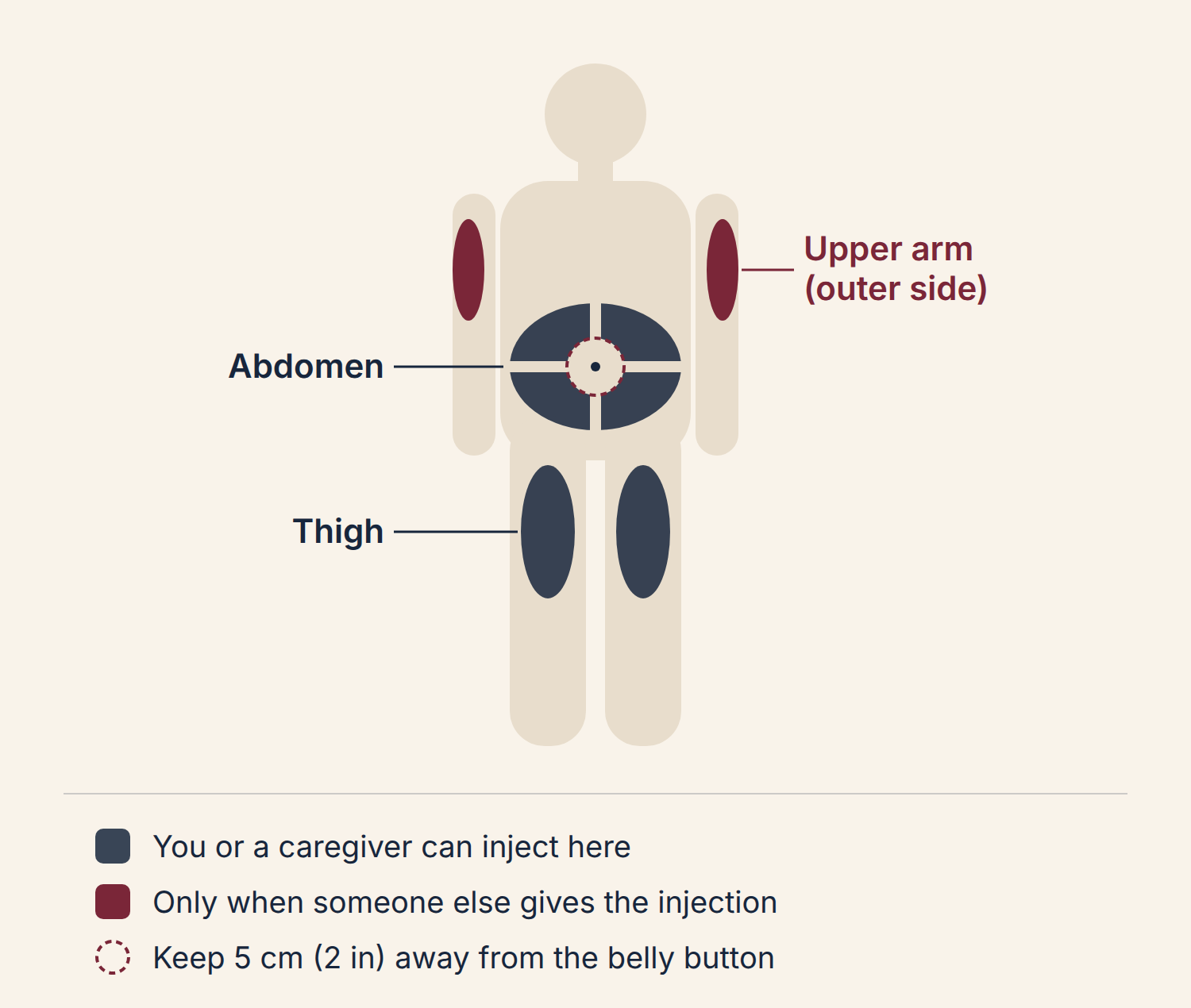
- Front of the thigh
- Belly (abdomen), staying at least 5 cm (2 inches) away from the belly button
- Outer side of the upper arm, only if someone else is giving you the injection
Use a different spot each time. Do not inject through clothing, and avoid skin that is sore, bruised, red, hard or scarred.
Storing your medicine
- Keep it in the fridge (2–8 °C) in its original box, away from light. Do not freeze or shake it.
- Take it out 30–60 minutes before your injection so it reaches room temperature. This makes the injection more comfortable.
- Each medicine can stay out of the fridge only for a limited time. Check the leaflet or ask us.
- Never leave it in a hot car or in direct sun. When travelling, carry it in a cool bag, not touching the ice pack directly.
When to get help
Seek emergency care right away if you have trouble breathing, swelling of the face, lips or throat, dizziness, or a widespread rash after an injection.
Expected outcomes
Breathing and sense of smell may improve. Polyps may get smaller, and you may need less of some other treatments. Results vary from person to person. This is usually an ongoing treatment, not a one-time fix.
Side effects
Side effects vary by medicine, but are usually mild. They may include irritation or soreness where the injection is given. The risks of the specific medicine can be discussed with you before treatment starts.