
Page Summary
- A typical prescribed medicated rinse uses a salt packet + water prepared safely for nasal irrigation + prescribed steroid drops.
- Use distilled or sterile water, or water that has been boiled and allowed to cool.
- Add medication only when it has been specifically prescribed for your rinse.
- Download the illustrated PDF to see step by step how to prepare and use the rinse.
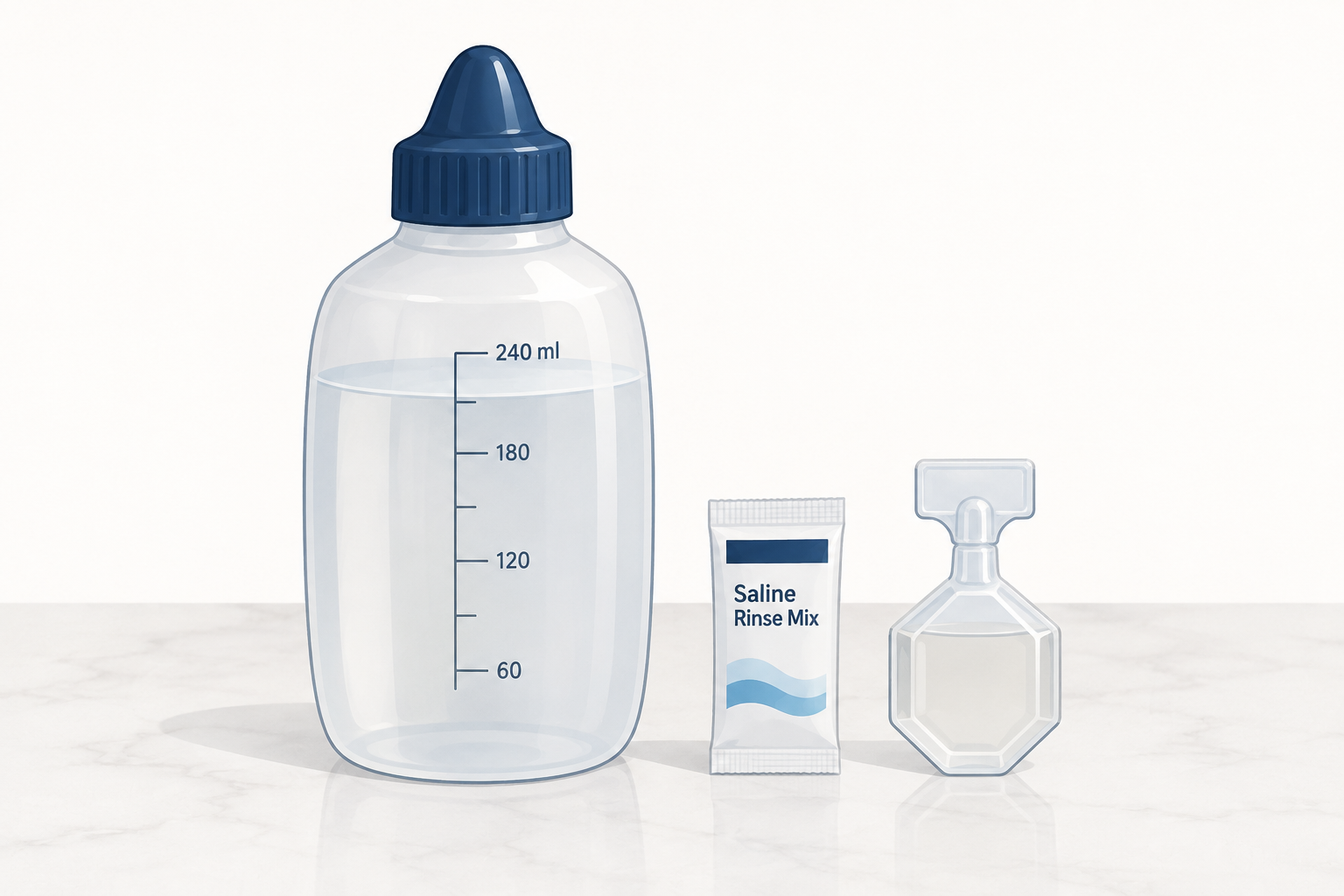
Original educational illustration created by the author. The items shown are generic examples of rinse supplies and do not represent a particular brand. Source: Samargandy S, 2026.
How to cite this figure →Nasal saline irrigation helps clear mucus, crusting, and allergens from the nose and sinuses. It is used for many conditions, including allergic rhinitis, chronic sinusitis, and care after nasal or sinus surgery.
Ways to prepare or obtain saline
These are three alternative ways to get your saline, not steps to follow in order. Choose whichever suits you:
1. Premixed saline packets
Add one nasal-rinse saline packet to approximately 240 mL of water that is safe for nasal irrigation, then shake the bottle until the contents dissolve.
2. Make saline at home
To prepare a larger amount: 1 litre of water that is safe for nasal irrigation, 1 teaspoon of non-iodized sea salt, and 1 teaspoon of sodium bicarbonate. Mix well and store in a clean container.
3. Ready-made saline
Ready-made saline suitable for nasal irrigation can also be used. This is convenient, but it may become more expensive with frequent use.
Xylitol rinses
If you do not find the usual saline rinse comfortable, or you have significant nasal dryness, you can use rinse sachets that contain xylitol, such as NeilMed Sinus Rinse Xylitol, with the same rinse bottle. This may be a more comfortable option for some patients.
What water should I use?
Do not put tap water directly into your nasal-rinse bottle.
Use one of the following:
- distilled water
- sterile water
- water that has been boiled and then allowed to cool
How to perform nasal irrigation
- Fill the rinse bottle with saline.
- Bend forward over the sink with your face directed downward.
- Place the bottle tip gently against one nostril.
- Aim the bottle toward the back of your head, not upward toward your eye or forehead.
- Keep your mouth naturally open and breathe through your mouth.
- Gently squeeze the bottle so the saline passes through the nose.
- Saline may come out of the opposite nostril, return from the same side, or reach the mouth. If it reaches your mouth, spit it out.
- Repeat on the other side.
Unless you have been instructed otherwise, you can usually use half of the bottle on each side.
Use the rinse as often and in the amount recommended by your doctor. For routine use, it may be used twice daily, but instructions may vary depending on the condition being treated.
Bottle direction matters
Do not aim the bottle toward the nasal septum in the middle of the nose, or upward toward the eye.
The correct direction is backward toward the head, while keeping the face directed downward during the rinse.

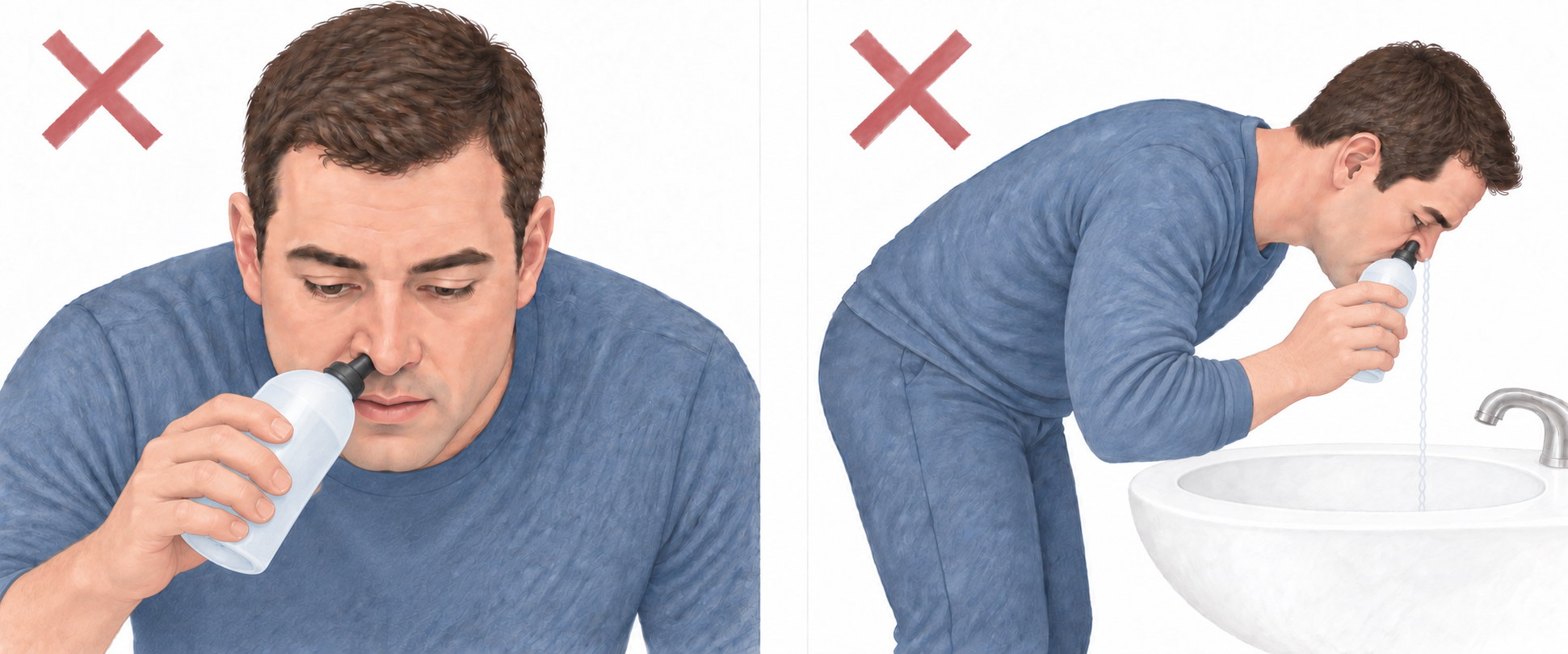
These photographs demonstrate technique only. The bottle shown is an example of a squeeze-bottle rinse kit and is not a recommendation of a particular brand; equivalent devices may be used.
If you feel ear pain or pressure
If the rinse causes ear pain or pressure:
- squeeze the bottle more gently
- make sure the direction of the rinse is correct
- stop and contact your doctor if the problem continues
Cleaning and disinfecting the bottle
Wash the bottle, cap, and tip with soap and water between every use, then allow them to dry thoroughly.
Once a week, disinfect the bottle according to the manufacturer's instructions.
Replace the bottle if it becomes damaged or difficult to clean.
After sinus surgery
Nasal irrigation becomes especially important after endoscopic sinus surgery, because it helps remove retained blood, crusts, and mucus while the nose and sinuses heal.
After surgery, you may need to use a larger volume and rinse more frequently than during routine use. A common postoperative instruction is one full bottle on each side at least three times daily during the early healing period, but follow the specific instructions given by your surgeon, because the amount and frequency may vary depending on the surgery and the stage of healing.
Adding medication to the rinse
In some cases, your doctor may prescribe medication to be added to the nasal rinse. Do not add medication on your own. Use only the medication, amount, and method prescribed for you.
Printable version
The full instructions are on this page. The leaflet below is a printable copy of the same instructions, if you prefer to keep them on paper.
Frequently asked questions
Are steroid nasal sprays or steroid nasal rinses safe?
Yes, when used as prescribed. Intranasal steroid sprays have been studied extensively, and systemic absorption at usual doses is very low, so whole-body steroid side effects are uncommon. Studies have also shown that steroid medication added to nasal rinses is safe for most patients when used long term. Your doctor may recommend monitoring in some situations, particularly with prolonged use or if you are using other steroid medications at the same time.
What kind of rinse bottle should I use?
Any rinse bottle designed for nasal irrigation can work, provided it delivers a gentle, low-pressure flow and can be cleaned properly. Commonly available kits, such as NeilMed Sinus Rinse or similar squeeze-bottle systems, are examples of this type of device rather than recommendations, and equivalent products are acceptable. What matters clinically is the salt concentration, the water you use, the direction of the rinse, and keeping the bottle clean — not the brand. After sinus surgery, the usual rinse bottle of approximately 240 mL can be used.