
Page Summary
- Sinus surgery opens affected sinus pathways through the nostrils, without external incisions.
- It is considered after appropriate medical treatment has not provided enough improvement.
- The extent of surgery is tailored to the type and extent of sinus disease.
- Surgery improves sinus drainage and access for treatment, but ongoing medical treatment may still be needed.
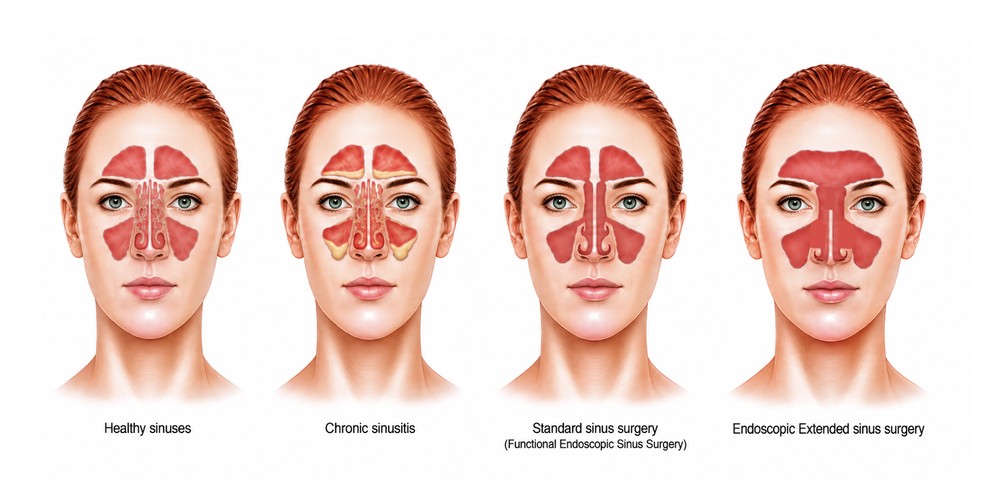

Original educational illustration created by the author; anatomy is simplified for clarity. Source: Samargandy S, 2026.
How to cite this figure →Endoscopic Sinus Surgery
The surgeon passes a small camera, called an endoscope, through the nostrils to see inside the nose and sinuses. Fine instruments are then used to open blocked sinuses and remove polyps, without any cuts on the face.
For a simple overview of the anatomy, see What Are the Sinuses?
Who may benefit?
Surgery may help when sinus problems do not improve enough with medicine.
Alternatives
Appropriate medical therapy is considered first, which, in selected patients, may include biologic therapy for nasal polyps. Surgery is discussed when this hasn't given adequate relief.
What happens during surgery?
You are asleep under general anesthesia. The surgeon widens the natural openings of the sinuses and removes blocked or inflamed tissue. The goal is to improve drainage and allow rinses and medicines to reach the sinuses more effectively. In some patients, septoplasty or turbinate reduction may also be performed at the same time if needed.
Recovery
Most people go home the same day. Nasal rinses usually start the day after surgery. The nose often feels blocked or congested for the first couple of weeks while swelling settles and healing begins. Discomfort is usually mild to moderate and can usually be managed with the pain medicine recommended after surgery. Follow-up visits are arranged during the first few weeks to check healing and gently clean the nose and sinuses when needed. Most people return to normal daily activities within one to two weeks.
Read more about recovery after endoscopic sinus surgery.
Risks
Most people recover without problems. Possible complications and limitations include:
- Bleeding.
- Infection.
- Scar tissue or narrowing during healing.
- Rare injury to the eye or orbit, or to the skull base.
- Changes in the sense of smell.
- Symptoms may not improve as much as expected, or sinus disease may recur over time.
These are discussed with you before surgery.
Follow-up
Take the medicines prescribed after surgery as directed, even if you are feeling better. This is especially important for people with nasal polyps, as ongoing treatment helps keep inflammation under control.
Smoking and surgery
Stopping smoking is strongly recommended for at least 4 weeks before surgery and 4 weeks afterward. Smoking increases the risk of breathing and anesthesia-related complications, infection, and delayed healing. If your surgery is sooner, stopping now is still beneficial.
Frequently asked questions
Are the results of sinus surgery permanent?
The openings enlarged during sinus surgery usually remain open, but this does not mean that chronic inflammation has been permanently cured.
If you have chronic sinusitis, especially with nasal polyps, you may still need ongoing treatment after surgery to control inflammation and reduce the chance of symptoms or polyps returning.
Surgery improves ventilation and drainage of the sinuses and also helps topical treatments reach the sinuses more effectively. The best long-term results usually come from combining surgery with appropriate medical treatment afterward.