Page Summary
- Septoplasty corrects a deviated septum; turbinoplasty reduces enlarged turbinates when they contribute to nasal obstruction.
- The goal is a wider nasal airway and easier breathing.
- The procedure is performed through the nose.
- It is not intended to change the external shape of the nose.
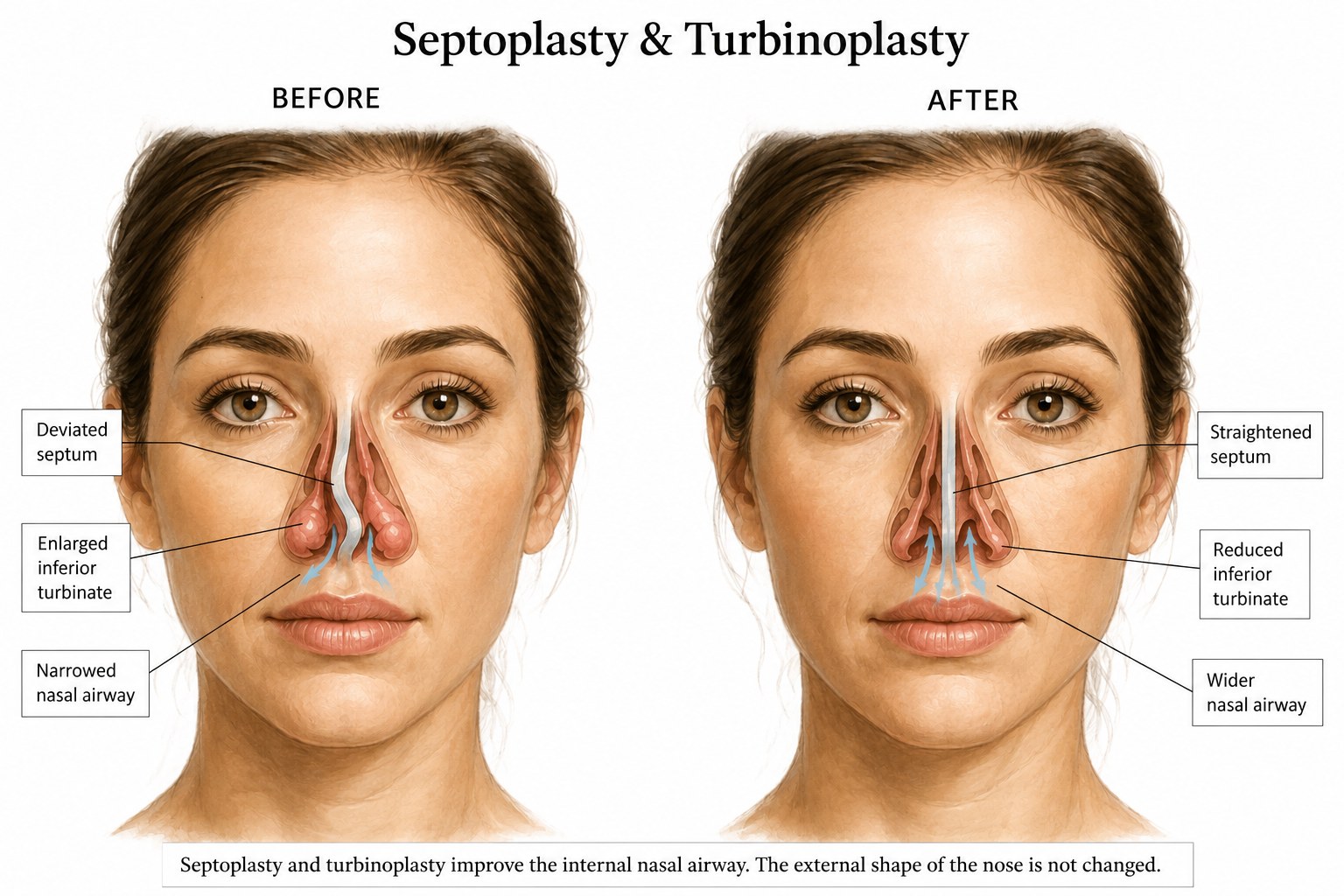
Original educational illustration created by the author. Anatomy is simplified and may not be completely anatomically accurate for clarity. Source: Samargandy S, 2026.
How to cite this figure →Septoplasty and turbinoplasty are two different procedures that are often performed together during the same operation, since a deviated septum and enlarged turbinates commonly contribute to nasal blockage at the same time.
Septoplasty
What is it?
This surgery straightens the wall inside your nose. It's all done inside the nose — no cuts you can see on the outside.
Who may benefit?
People whose blocked nose is mainly caused by a crooked septum, and who haven't found relief through medicine alone.
What happens during treatment?
The surgeon works through the nostrils to correct the deviated part of the septum, which may involve reshaping the cartilage or removing part of it. The aim is to improve the airway while keeping the septum stable and the structure of the nose supported.
Recovery
Most people go home the same day. Some swelling in the first week is normal. Most people are back to work within about a week.
Turbinoplasty
What is it?
Turbinates are small structures inside the nose that help warm, humidify and filter the air we breathe. When they become too enlarged, they can narrow the airway. This surgery reduces their size to widen the airway inside the nose.
Who may benefit?
People whose nasal blockage is mainly caused by enlarged turbinates and who haven't improved enough with sprays or allergy treatment. It's often done alongside septoplasty.
What happens during treatment?
The turbinates are carefully reduced in size to widen the airway, while preserving as much of their normal function as possible.
Recovery
Recovery is usually straightforward. The nose may feel blocked or congested at first because of swelling, and breathing improves as the swelling settles. When turbinoplasty is performed together with septoplasty, overall recovery is usually not very different from septoplasty alone.
Alternatives
Symptoms may improve with nasal sprays or allergy treatment where appropriate. When there is no deviated septum that needs correction, Coblation may be an office-based option for selected milder cases.
Smoking and surgery
Stopping smoking is strongly recommended for at least 4 weeks before surgery and 4 weeks afterward. Smoking increases the risk of breathing and anesthesia-related complications, infection, and delayed healing. If your surgery is sooner, stopping now is still beneficial.