
Page Summary
- Revision surgery begins with identifying why disease or symptoms persisted after previous surgery.
- The operation is tailored to the specific anatomy and areas of remaining or recurrent disease.
- Revision procedures can be more complex because of altered anatomy and scarring from previous surgery.
- The goal is to correct problems that further surgery can reasonably improve.
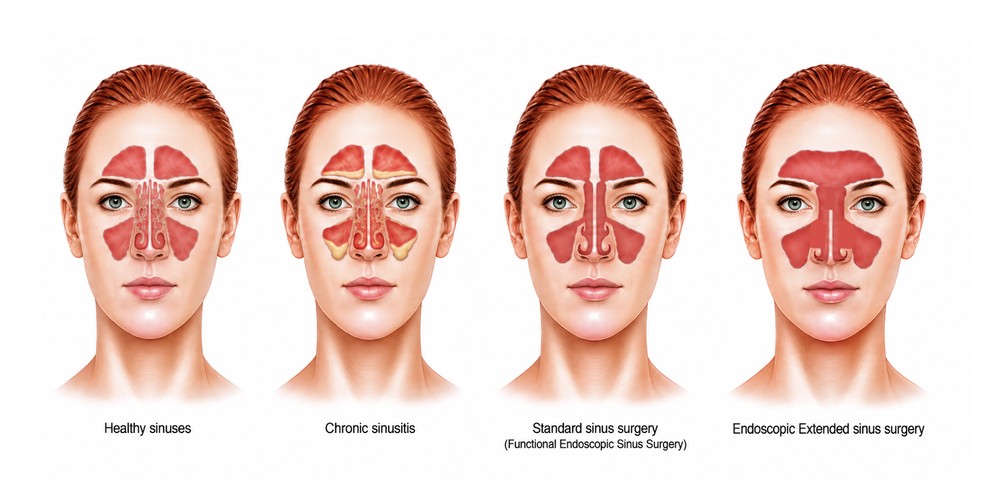

Original educational illustration created by the author; anatomy is simplified for clarity. Source: Samargandy S, 2026.
How to cite this figure →Revision Endoscopic Sinus Surgery
Revision sinus surgery treats sinus problems that persist or return after previous surgery. Because prior surgery may have changed the shape and pathways of the sinuses, revision surgery often requires more detailed planning.
Who may benefit?
People whose symptoms haven't gone away after one or more sinus surgeries, especially when scar tissue or adhesions are part of the problem.
What is the goal of surgery?
The goal is to treat persistent blockage, scar tissue or adhesions, inflammation, and the problem causing the symptoms. This may include widening narrow sinus openings, opening sinuses that were not previously opened when needed, and improving sinus drainage and ventilation.
What is image-guided surgical navigation?
This technology works somewhat like a GPS system during sinus surgery. Your preoperative CT scan is linked to the surgical instruments, helping the surgeon identify where the instruments are during the operation.
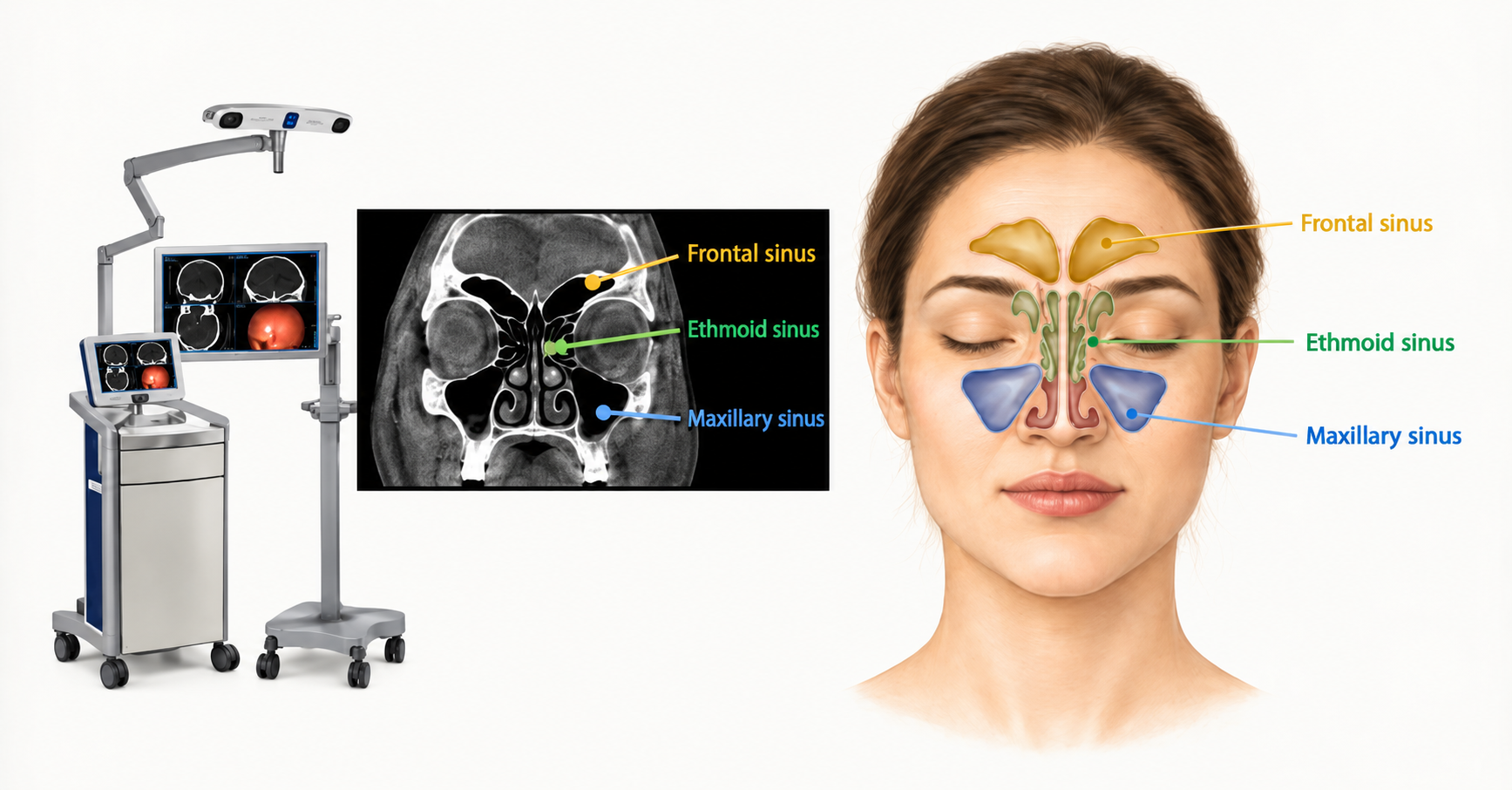
It may be used during revision surgery, particularly when previous surgery or scar tissue has changed the usual landmarks. It may also help when working close to the eyes, skull base, and other sensitive areas.
Surgical navigation is an additional guidance tool used alongside direct endoscopic visualization.
Recovery
Recovery depends on the extent of surgery. In many cases it is similar to recovery after the first sinus surgery, but it may take longer after more extensive revision surgery. Regular follow-up is important to monitor healing and address scar tissue or adhesions early.
Smoking and surgery
Stopping smoking is strongly recommended for at least 4 weeks before surgery and 4 weeks afterward. Smoking increases the risk of breathing and anesthesia-related complications, infection, and delayed healing. If your surgery is sooner, stopping now is still beneficial.